Best Season To See The Antelope Canyon Light Beams
The light beams at Antelope Canyon are a seasonal event, not a daily guarantee. They appear when the sun climbs high enough to shine directly down into the slot, which only happens from late spring through early autumn, and only around midday. This guide explains the window, the canyon section that shows it best, and the booking lead time a Phoenix departure needs.
Short answer
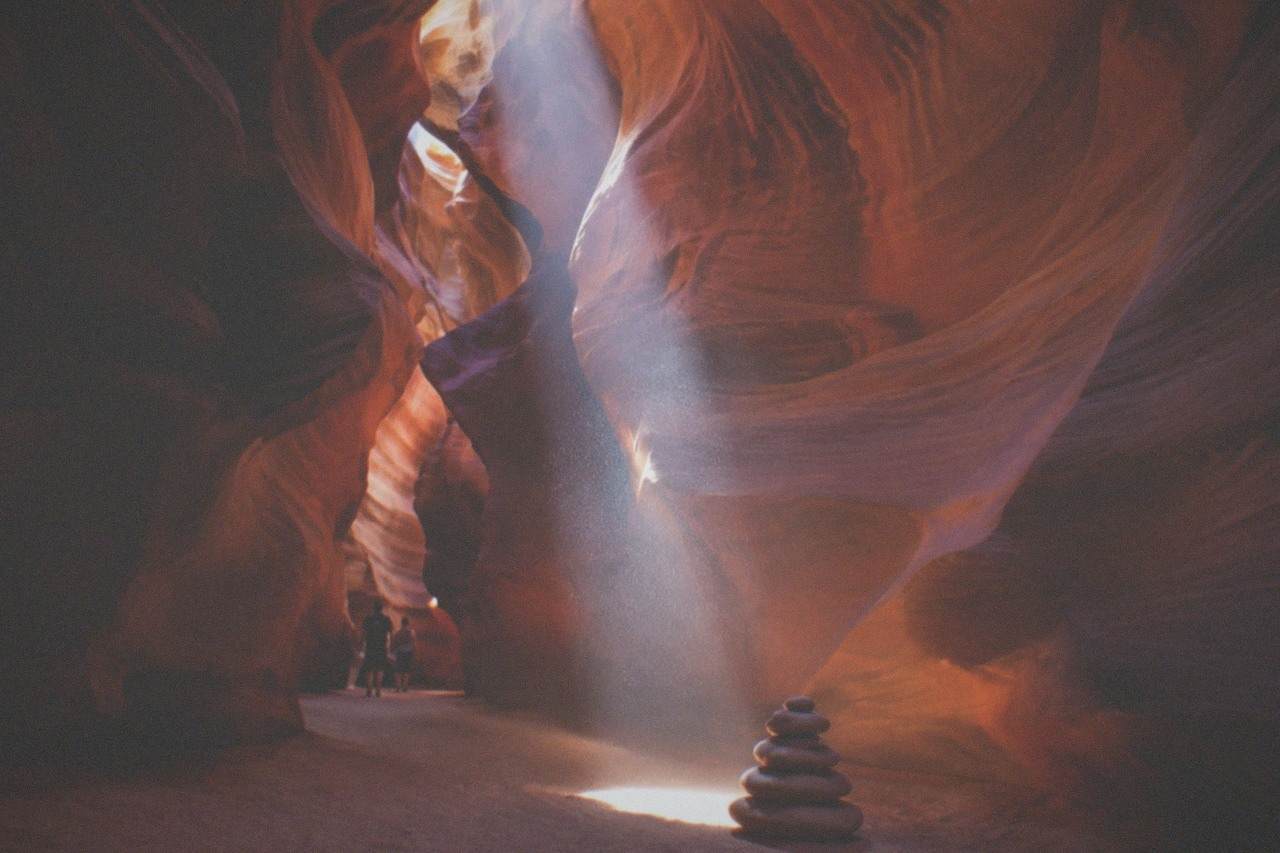
Antelope Canyon light beam season runs roughly late March through early October, peaking from May to September when midday sun drops straight into the slot. Upper Antelope Canyon shows the beams best, between about 11:00 and 13:30. Upper tours in this window sell out 4 to 6 weeks ahead, and up to 3 to 6 months ahead in summer.
Antelope Canyon sits on Navajo Nation land near Page, Arizona, roughly 275 miles and four and a half to five hours north of Phoenix by road. It is a guided-only site: every visit goes through an authorized Navajo-guided tour, with a $15 per person Navajo Parks permit fee on top of the tour price, per location per day for ages 8 and up. That rule shapes everything about beam season, because the midday slots that produce the beams are also the slots every tour operator wants.
The beams themselves are a physics trick. The canyon is a narrow, twisting sandstone slot, and for most of the year the sun strikes its walls at an angle, lighting the rock in warm oranges and purples but never reaching the floor directly. For a few months either side of the summer solstice, the midday sun climbs nearly overhead, and shafts of light drop through the narrow ceiling openings all the way to the sand below. Dust and sand kicked up by visitors make the shafts visible, which is why guides sometimes toss sand into the beam.
When Is Antelope Canyon Light Beam Season?
Light beam season at Antelope Canyon runs from roughly late March through early October, with the strongest and most reliable beams from May through September. The effect depends on the sun's angle, so it peaks around the June solstice and fades as the midday sun drops lower. Outside this window the canyon is still beautiful, but the vertical shafts of light do not form.
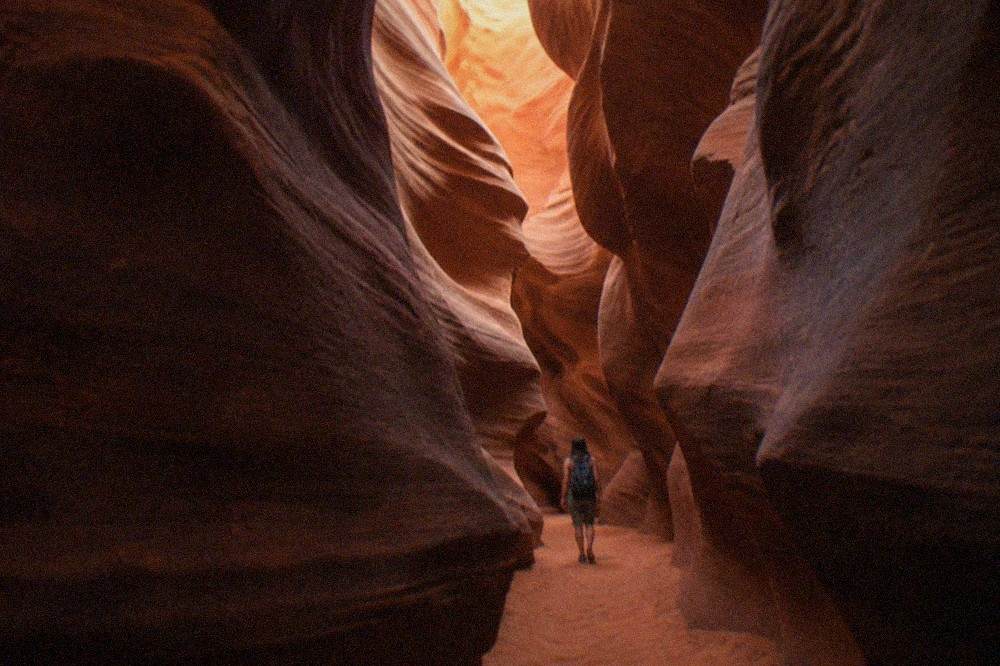
The exact edges of the season shift a little each year with the sun's path, and operators adjust their tour calendars around it. What stays constant is the pattern: beams begin appearing on clear midday days in late March, strengthen through spring, are at their best from late May through July, and thin out through September before disappearing by early to mid October. Winter visitors get a softer, cooler-toned canyon with scattered light, not beams.
Cloud cover matters more than most first-time visitors expect. A beam tour on an overcast midday can produce no visible shafts at all, which is why operators frame beam sightings as likely rather than guaranteed. Morning and afternoon tours in the same season show glowing, well-lit walls but rarely the vertical beams, because the sun is off to the side by then.
Here is how the season breaks down month by month:
| Period | Beam Outlook | Notes For Planning |
|---|---|---|
| March (late) | Beams begin, inconsistent | First midday shafts appear near the solstice build-up |
| April to May | Good, strengthening | Clear skies common, crowds lower than summer |
| June to July | Peak beams | Highest sun angle; book Upper tours months ahead |
| August to September | Strong, monsoon risk | Afternoon storms can cancel or dim same-day tours |
| October (early) | Fading, occasional | Last shafts of the year on clear midday days |
| October (mid) to March | No beams | Canyon still scenic; softer angled light |
The trade-off inside the peak is worth naming plainly: the best beam months, July and August, are also monsoon months in northern Arizona, when flash-flood cancellations happen. We cover that trade-off in detail further down.
Why The Beams Only Happen In Late Spring And Summer
The beams form only when the midday sun is nearly overhead, which at Antelope Canyon's latitude happens from late spring through early autumn. The canyon runs deep and narrow, so sunlight reaches the floor vertically only when the sun's angle is high. The rest of the year the walls intercept the light before it can drop straight down.
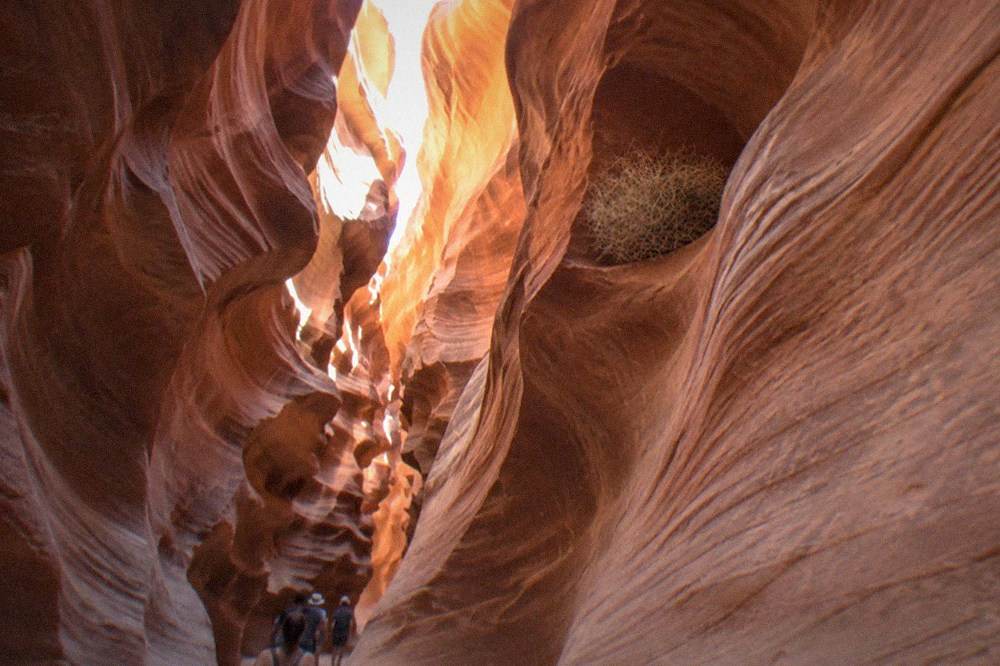
Upper Antelope Canyon, known to the Navajo as Tsé bighánílíní, "the place where water runs through rocks," is the wider, flatter walk of the two sections. Its ceiling openings sit almost directly above the walking path in places, so an overhead sun sends shafts straight down onto the sand. Lower Antelope Canyon is narrower, steeper, and walked through metal staircases; it produces its own dramatic light, especially the famous orange glow, but fewer of the classic vertical beams.
The beams are also partly made by people. The shafts show best when fine dust hangs in the air, and guides traditionally throw sand into the light to make the beams dense and photogenic. A dry, still midday with a tour group walking through gives the strongest effect. Rain nearby, or heavy wind funnelling through the slot, can wash the effect out even in the right season.
This is also why the midday tours cost the most and sell out first across every operator. The beams are the single most requested thing at Antelope Canyon, and the window that produces them is both seasonal and about two hours wide each day. That scarcity is the whole reason booking lead time matters so much here.
If you are weighing the two canyon sections against each other, our Upper vs Lower Antelope Canyon comparison breaks down the walk, the crowds and the photography case for each.
Upper Or Lower Canyon: Where Do The Beams Actually Appear?
Upper Antelope Canyon is the beam canyon. Its ceiling openings sit above the walking route, so overhead midday sun drops shafts directly onto the sand. Lower Antelope Canyon sees far fewer vertical beams and instead glows with intense reflected orange and purple light, which many photographers actually prefer for color.
The choice is not as one-sided as the guidebook shorthand suggests. Upper is flat, easy walking with no stairs, which makes it the better pick for families and anyone with mobility limits, and it is where the iconic beam photos come from. Lower is a steeper walk through ladders and staircases, longer, cheaper on most operators' sheets, and far less crowded because the beam crowds concentrate on Upper.
| Factor | Upper Antelope Canyon | Lower Antelope Canyon |
|---|---|---|
| Vertical light beams | Yes, the classic shafts | Rare; mostly angled glow |
| Walking difficulty | Flat, sandy floor | Stairs, ladders, narrower slots |
| Crowds in beam season | Heaviest, midday especially | Lighter through the day |
| Booking lead time | 4 to 6 weeks typical, 3 to 6 months in summer | 1 to 3 weeks typical |
| Best light character | Midday beams | Late morning and afternoon glow |
The booking column is the practical one. Upper Antelope Canyon midday tours in the May to September window are among the fastest-selling slots in the American Southwest; the light-beam departures often sell out 4 to 6 weeks out, and in peak summer months, 3 to 6 months out. Lower is more forgiving at 1 to 3 weeks, which makes it the fallback when a trip comes together late. Our Antelope Canyon booking lead time guide goes deeper on timing by season.
Both sections are guided-only, with no self-entry under any circumstances, and the $15 per person Navajo Parks permit applies per location per day. The Navajo Nation's parks authority maintains the authorized operator list on its official parks site, which is the right place to verify any operator's standing before booking.
What Time Of Day Do The Light Beams Show?
The beams appear in a midday window, roughly 11:00 to 13:30, with the strongest shafts usually between about 11:30 and 13:00. Tours are sold in timed entry slots, and the midday slots are the beam slots. Book a departure timed inside that window, not the first or last tour of the day.
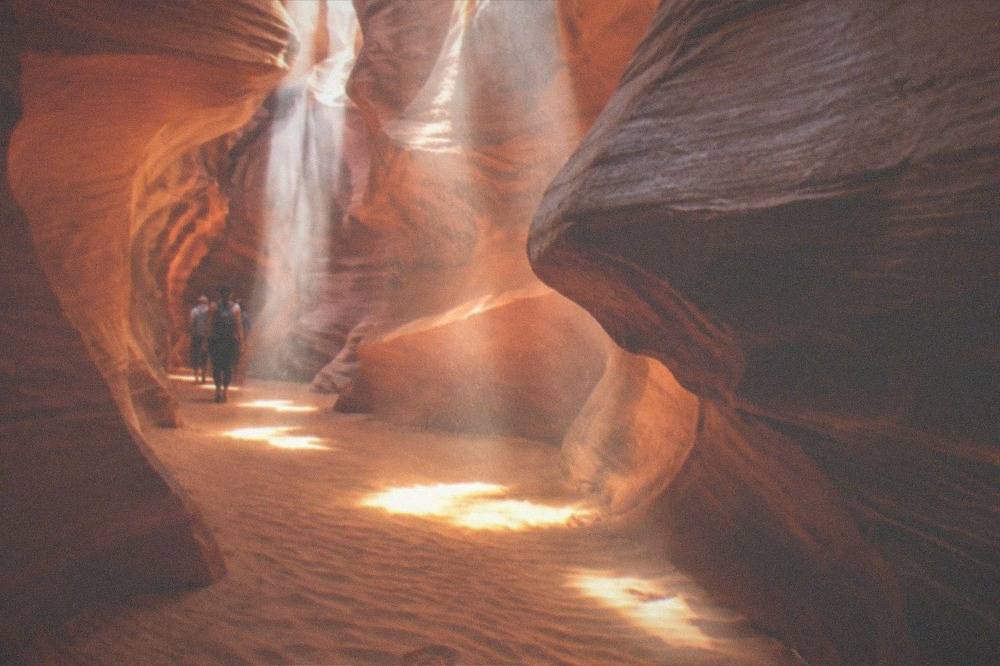
Operators label these departures explicitly, often as "midday" or "light beam" tours, and price them above morning and afternoon departures. The premium buys the only hours in which the geometry works. A 9:00 entry into Upper Antelope Canyon in July still shows a spectacular glowing canyon, but the sun has not climbed high enough for the shafts, and by 15:00 it has already dropped off them.
Two practical notes come with the midday window. First, midday in the desert is the hottest part of the day; the slot itself stays shaded and cool, but the walk from the check-in area to the canyon entrance is exposed. The National Weather Service Phoenix office tracks heat risk with its HeatRisk framework, which weighs overnight lows and how unusual the heat is for the date rather than one fixed temperature trigger, so check the live NWS Phoenix forecast before any outdoor midday activity in the desert months.
Second, the midday slots are the ones that sell out first, months ahead in summer. If a beam sighting is the point of the trip, book the midday Upper departure first and build the rest of the itinerary around it, not the other way around. The Page area visitor site publishes seasonal tour schedules that show how the midday slots shift with the calendar.
How Far Ahead Should You Book A Beam Tour?
Book an Upper Antelope Canyon midday tour 4 to 6 weeks ahead for spring and fall dates, and 3 to 6 months ahead for June through August. Lower Antelope Canyon needs 1 to 3 weeks. From Phoenix, the day tour itself also needs the same lead time, because the tour operator must reserve your canyon slot before confirming the pickup.
The two bookings are linked. A Phoenix-departure day tour does not run its own casual entry into the canyon; it reserves timed slots with a Navajo-guided operator, so the availability you see on the day tour's live listing reflects what the canyon operators still hold. When midday Upper slots are gone, the day tour cannot create more.
| Booking Scenario | Recommended Lead Time | Why |
|---|---|---|
| Upper midday, June to August | 3 to 6 months | Peak beam slots sell out first |
| Upper midday, April to May or September | 4 to 6 weeks | Strong demand, slightly softer |
| Upper morning or afternoon, any season | 1 to 2 weeks | Off-peak slots, no beams |
| Lower, any time | 1 to 3 weeks | More flexible inventory |
| Phoenix day tour around a beam slot | Same as the slot itself | Tour must hold the canyon entry |
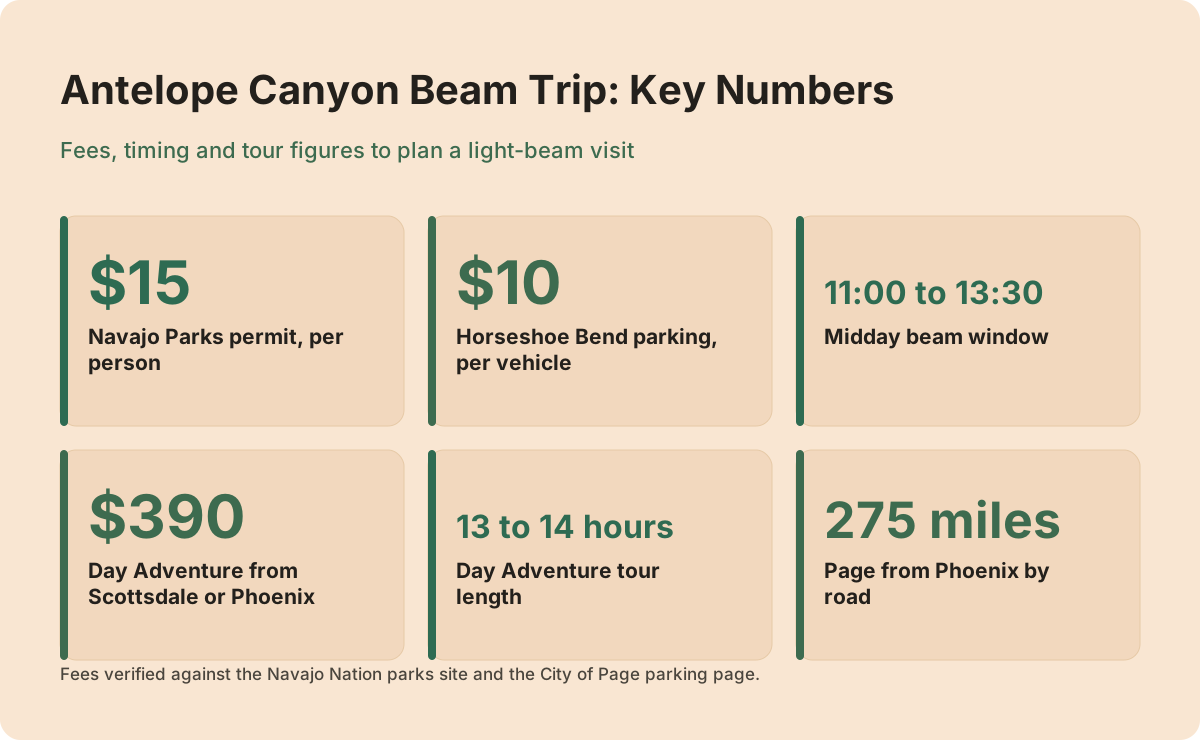
The Antelope Canyon and Horseshoe Bend Day Adventure from Scottsdale or Phoenix runs 13 to 14 hours and holds a 4.9 rating from 113 reviews, from $390 per person with hotel pickup offered. It is the mid-price option among the roster's Page departures and fits the beam plan if your base is Scottsdale rather than central Phoenix. You can compare dates and details on the Day Adventure's tour page, with live times and availability on the operator's listing.
Can You See Beams Outside The Peak Season?
No. From mid October through mid March the midday sun is too low to drop shafts into the slot, and no tour time or canyon section changes that. What you get instead is angled, reflected light that many photographers prefer for its softer color, plus smaller crowds, lower prices and easier booking at short notice.
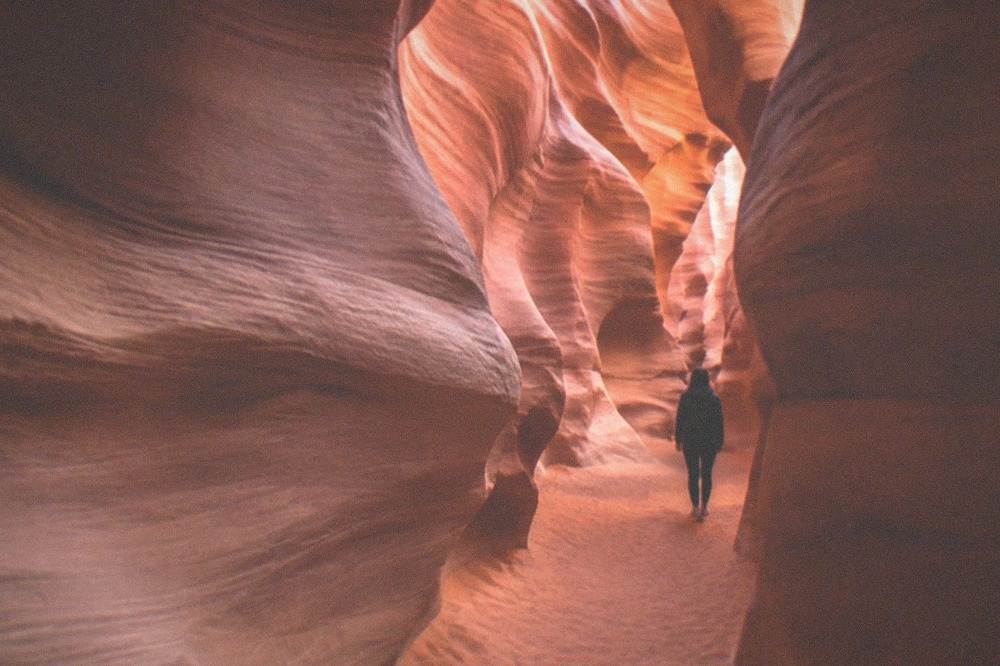
That is not a consolation prize to dismiss quickly. Winter Antelope Canyon is quieter, cooler for the walk in, and dramatically easier to book; Lower Antelope Canyon in late morning winter light produces deep orange and purple tones without a single beam. If the trip dates are fixed by work or school calendars and land in November, the honest answer is to plan for glow, not beams, and enjoy the thinner crowds.
The reverse also matters: travelers who fixate on beams sometimes book a July midday tour and hit a monsoon day, and see less light than a November visitor. The beam season is a probability window, not a guarantee. If seeing shafts is the single reason for the trip, build in a buffer day near Page so a weather cancellation does not end the plan.
One more seasonal note from the region: Lake Powell, next to Page, reached record-low levels around 3,517 feet in September 2026 amid long-running drought. It does not affect the canyon itself, but it changes what a buffer day in Page looks like if you planned lake time around the tour, and our Lake Powell after your Antelope Canyon tour guide covers what to expect.
Monsoon Season: The Summer Trade-Off
July through September brings the strongest beams and the highest cancellation risk at the same time. Monsoon storms can flood slot canyons, and Antelope Canyon tours are sometimes cancelled same-day when storms sit over the watershed above the canyon. Operators monitor the risk and cancel for safety, not for show.
The reason is simple geography. Antelope Canyon is a drainage: water runs through it, which is how it was carved. A storm miles away can send a flash flood down the slot even under blue sky overhead, so guides watch upstream conditions, not just the local forecast. Same-day cancellations in the July to September window are a real possibility, and booking terms matter when they happen.
For Phoenix-departure day tours the stakes are a little different. A 15 to 16 hour day that gets cancelled at the canyon door after four and a half hours of driving is a bad day, so the roster's Page departures plan their canyon entries in the morning or early midday window and keep the itinerary flexible around weather. The Horseshoe Bend and Antelope Canyon Day Tour from Phoenix, a 14 hour departure rated 5.0 from 63 reviews, from $375 per person, meets on site rather than offering hotel pickup, which suits travelers staying in Scottsdale or with a rental car.
Two fees sit outside the tour price and are worth budgeting before the day. The Navajo Parks permit is $15 per person per location per day, and Horseshoe Bend parking, the stop most Page itineraries include, is $10 per vehicle at the city-run lot, with no national park pass accepted. The City of Page lists current parking fees on its official Horseshoe Bend page.
Which Phoenix Departure Fits A Beam Day?
The roster's Page departures differ in length, price and pickup point, but all of them can be built around a midday canyon slot if booked far enough ahead. The From Scottsdale departure is the longest at 15 to 16 hours; the Day Adventure runs 13 to 14 hours from either city; the Phoenix departure meets on site. Prices run from $351 to $390 per person.
The From Scottsdale: Antelope Canyon and Horseshoe Bend Day Tour is the roster's flagship for this route: 15 to 16 hours, rated 4.9 from 42 reviews, from $351 per person, with hotel pickup offered and a "likely to sell out" flag on its listing. That flag is the beam-season story in miniature; the departures that hold the best canyon slots go first. Full details and current departure times are on the Scottsdale departure's tour page, with live availability on the operator's listing.
| Departure | Length | Rating | Price From | Pickup |
|---|---|---|---|---|
| From Scottsdale: Antelope Canyon & Horseshoe Bend | 15 to 16 hours | 4.9 from 42 reviews | $351 per person | Hotel pickup offered |
| Antelope Canyon & Horseshoe Bend Day Adventure | 13 to 14 hours | 4.9 from 113 reviews | $390 per person | Hotel pickup offered |
| Horseshoe Bend & Antelope Canyon from Phoenix | 14 hours | 5.0 from 63 reviews | $375 per person | Meet on site |
Choosing among them comes down to three questions. Where are you staying: the two hotel-pickup departures favor Phoenix and Scottsdale resorts, the on-site meeting favors self-drivers. How long a day can you handle: 15 to 16 hours is a serious day, back near midnight in summer. And which canyon section and time slot does the departure actually hold: that is the question to ask the operator before booking, because the listing price does not tell you whether the reserved slot is a beam slot.
For a fuller comparison of pairing both stops into one day, our Antelope Canyon and Horseshoe Bend combo tour guide walks the trade-offs in detail. Whichever way you go, this is one of the signature Day Tours from Phoenix that rewards booking early rather than late.
Common Questions About Antelope Canyon Light Beams
When is Antelope Canyon light beam season?
Roughly late March through early October, with the strongest beams from May through September and the peak around the June solstice. Outside that window the midday sun is too low to drop shafts into the canyon.
What time of day do the beams appear?
In a midday window of roughly 11:00 to 13:30, strongest between about 11:30 and 13:00. Book a tour timed inside that window; morning and afternoon tours show glowing walls but not vertical beams.
Upper or Lower Antelope Canyon: which has the light beams?
Upper Antelope Canyon is the beam canyon, with ceiling openings above the walking route. Lower produces intense reflected orange and purple light but few vertical shafts, and is easier to book at short notice.
How far in advance should I book a midday beam tour?
Upper midday slots typically sell out 4 to 6 weeks ahead, and 3 to 6 months ahead in June through August. Lower needs 1 to 3 weeks. A Phoenix day tour must hold the canyon slot, so it needs the same lead time.
Do the fees include the Navajo permit and Horseshoe Bend parking?
No. The $15 per person Navajo Parks permit is paid per location per day on top of the tour price, and Horseshoe Bend parking is $10 per vehicle at the city-run lot, which accepts no national park pass.
Can a monsoon storm cancel a beam tour?
Yes. From July through September, flash-flood risk can force same-day cancellations even under local blue sky, because storms upstream of the canyon send water through the slot. Build a buffer day near Page if beams are the trip's main goal.